
How to Visit the San Siro
Most of the grounds that used to feel like this are gone. Wembley was knocked down and rebuilt from scratch. Highbury is flats now. The old Maracanã was gutted down to its bones. Football keeps modernising its cathedrals into bowls — same capacity, same sightlines, none of the soul. The San Siro is one of the last of the old ones still standing, still raw, still exactly as intimidating walking up to it as it must have been forty years ago.
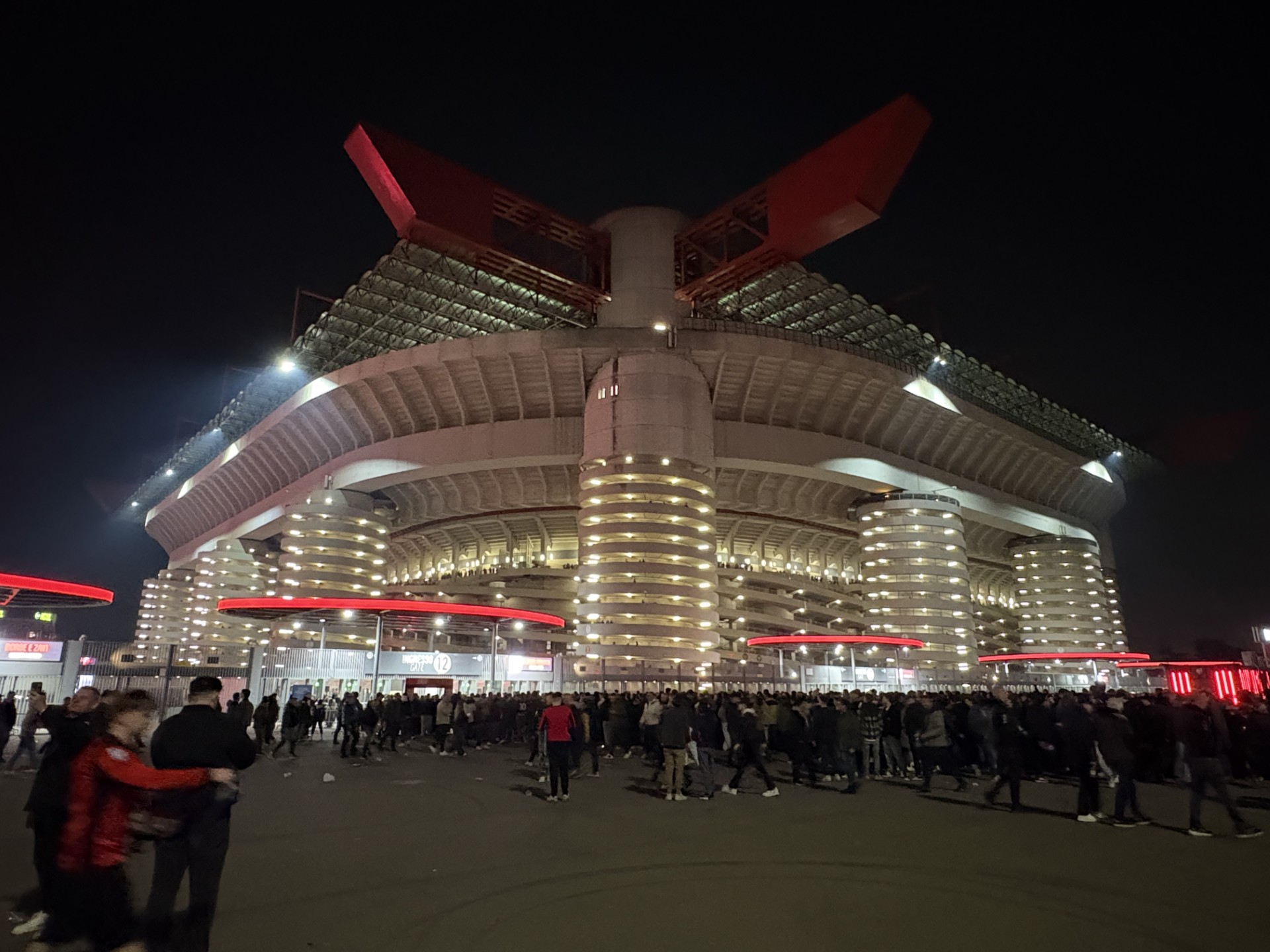
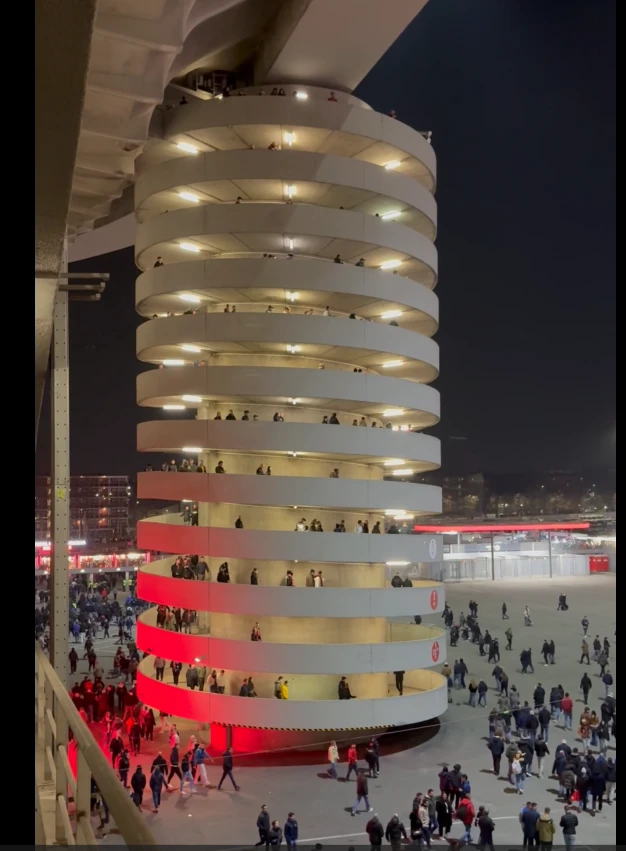
I'd seen it a hundred times on television before I ever stood in front of it, and none of that prepared me for how it actually feels at street level. It doesn't look like a stadium so much as something that landed. Four enormous cylindrical towers, spiral ramps wound around them like a helix, and a roof held up on trusses that look more like a suspension bridge than anything you'd expect above a football pitch. You don't really walk up to the San Siro. You walk up to it the way you'd walk up to a cathedral — and then you go inside and the noise finishes the job.
You don't walk up to the San Siro so much as arrive at the foot of it. Everything about it is built to make you feel small before a ball has even been kicked.
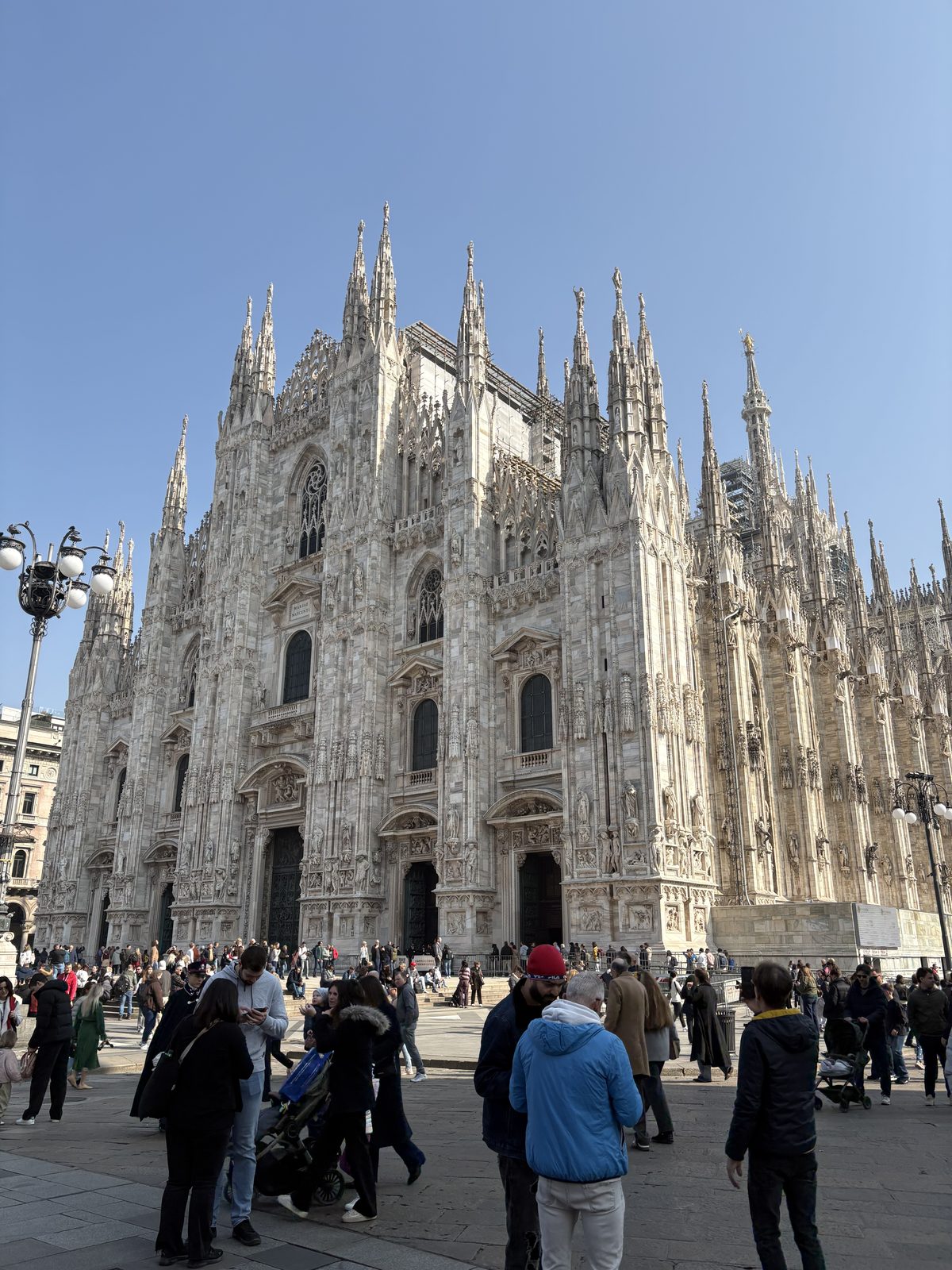
Milan already has a cathedral, obviously — the actual one, the Duomo, sitting in the middle of the city with its forest of white marble spires. I went and stood in front of that too on the same trip, and it's not really a fair fight: one of them took nearly six centuries to finish, the other took a weekend to make me feel exactly the same way.
A Stadium Built Twice
The San Siro opened in the 1920s as a home for AC Milan, a fairly modest ground by today's standards. What's standing now is really a second stadium built on top of the first — most dramatically ahead of the 1990 World Cup, when Milan added the third tier and those eleven concrete towers with the spiral access ramps wound around the outside. It's why the place feels less like a renovated old ground and more like two different eras of stadium architecture stacked on top of each other, because that's exactly what it is.
Officially it's the Stadio Giuseppe Meazza, named after the forward who played for — and is one of the very few players to have represented — both Milan clubs. Almost nobody calls it that. It's the San Siro, after the district it sits in, and that's the name that's stuck for a century.
One Ground, Two Clubs
What makes the San Siro genuinely unusual is that it's shared. AC Milan and Inter Milan, two of the biggest clubs in world football and fierce rivals, have played out of the same stadium since Inter moved in shortly after the Second World War. The fixture list alternates who's "at home" most weekends, so on any given trip it's worth double-checking which end you'll be walking into and which colours you'll be surrounded by.
There's no real equivalent anywhere else in Europe at this scale — two clubs of this size sharing one stadium for the better part of a century, rather than each building their own. It's part of what gives the San Siro its identity: it doesn't belong to one club's history, it belongs to the city's.
Check which club is "home" for your date before booking — the club shop, the museum displays, and even which metro exit gets you to the right side of the ground can differ depending on whose fixture it is.
The Derby della Madonnina
If you can build a trip around one fixture here, make it the derby. The Derby della Madonnina — named for the golden statue of the Madonnina that watches over the city from Milan's cathedral — is one of the loudest nights in European football, and it's the one occasion where the shared-stadium quirk actually adds to the occasion rather than just being a logistical footnote: both sets of fans have exactly the same claim to the ground, and neither is willing to give an inch of it up.
Even outside the derby, a standard Milan or Inter fixture at the San Siro carries more weight than most grounds manage on a European night. The bowl holds sound in a way modern stadiums, built wider and shallower for comfort, generally don't.
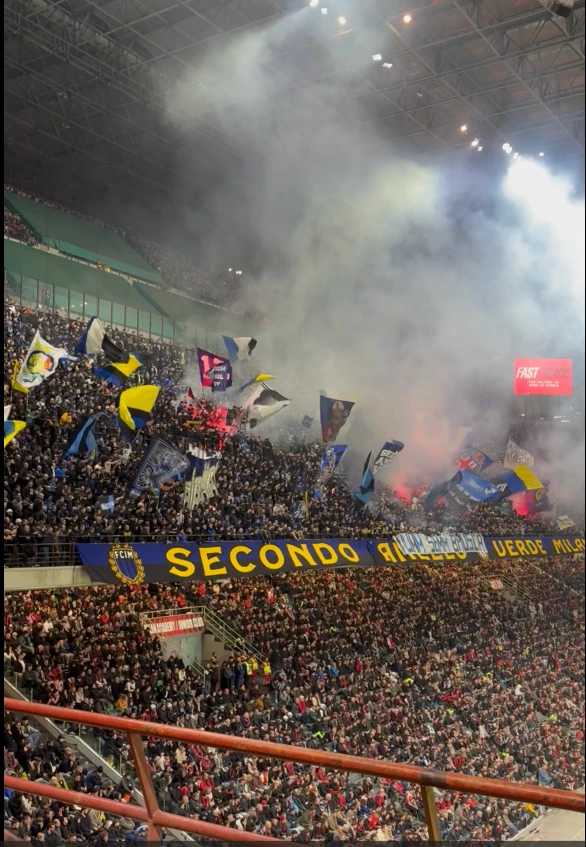
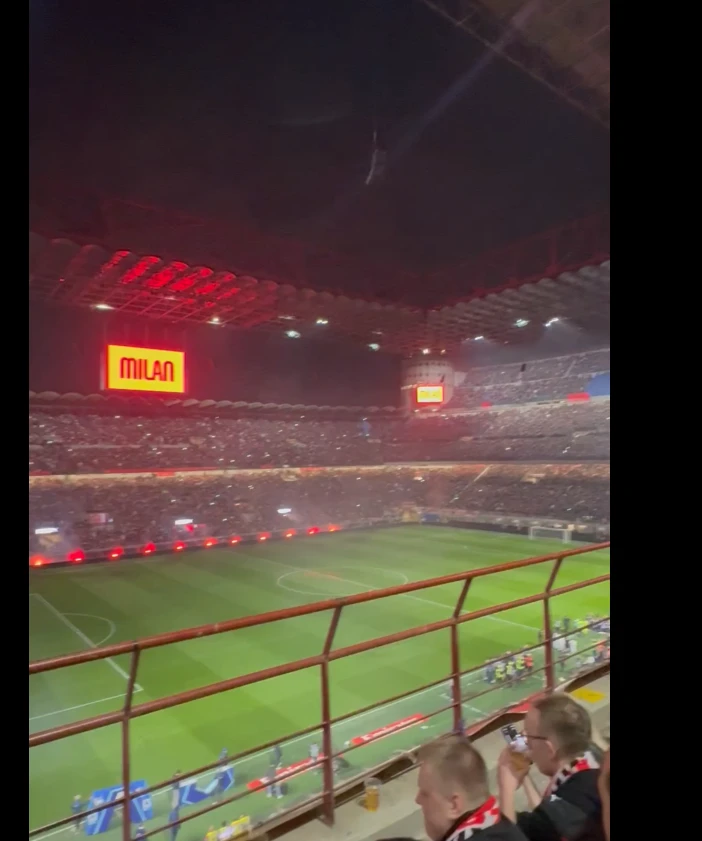
Get in early for whichever end you're sat in. The pre-match build-up — flags going up, flares getting lit, both curvas finding their voice before a ball's kicked — is as much a part of the occasion as the match itself.
Getting Tickets
Both clubs sell through their own official sites, and for a normal league fixture that's usually straightforward if you buy a couple of weeks out. The derby and Champions League nights are a different story — those sell out to members and season-ticket holders well before general sale, so if that's the game you want, start checking early and don't wait for it to be "close to the date" before you look.
Here's the bit that caught me out: to get my ticket for an Inter fixture, I still had to sign up through AC Milan's site for their own Cuore Rossonero (CRN) card. It's Milan's official supporter card, and it's what actually loads your ticket for access into San Siro — €20 plus shipping, valid for four years, so it's a one-off rather than something you pay for every trip. You register for a free MyMilan account first, then buy the card online or in person at Casa Milan. Buy it online and it arrives half-activated: you get a temporary code by email that only unlocks "Change User," while everything else — buying tickets, away-game access — stays locked until Milan's operators manually verify the ID documents you submitted at purchase. If the documents are clear, that's usually quick; if not, you're sorting it in person at Casa Milan or the San Siro ticket office instead. Buy the card in person at Casa Milan to begin with and you skip the wait entirely, since it's already active on the spot.
Once it's sorted, it's genuinely useful beyond just the one match: priority access ahead of general sale for the biggest fixtures, up to four tickets per match, 10% off in the club store, and it's the same card that gets you into away tickets too. Worth doing early rather than a week before you fly, and worth even more if Milan are back in Europe next season — that'll only push demand for it higher.
A regular league match at the San Siro is genuinely one of the more affordable "big club" tickets in Europe — it's the derby and the Champions League nights where prices climb, so pick your fixture with that in mind if you're on a budget.
Getting There
The stadium sits west of the centre, and every route into Milan gets you there in well under an hour. From Milano Centrale, it's the M2 (green line) to Garibaldi FS, then straight over to the M5 (purple line) to San Siro Stadio — about 30 minutes door to door. From the Duomo or the city centre, take the M1 (red line) to Lotto, then either walk the last 15 minutes with everyone else heading the same way, or transfer onto the M5 for the final stretch. If you're coming from the Navigli canal district, it's the same M2-to-M5 change via Garibaldi FS, closer to 35 minutes.
For something more old-school than the metro, Tram 16 runs from Missori, right by the Duomo, straight out to Piazzale Axum — which puts you at the stadium gates, no transfer required, just a longer ride at around 45 minutes. A single ticket covering metro, tram and bus is €2.20 for 90 minutes, or €7.60 for an unlimited day pass, and it's contactless — tap a bank card straight through the gates, no need to queue for a paper ticket.
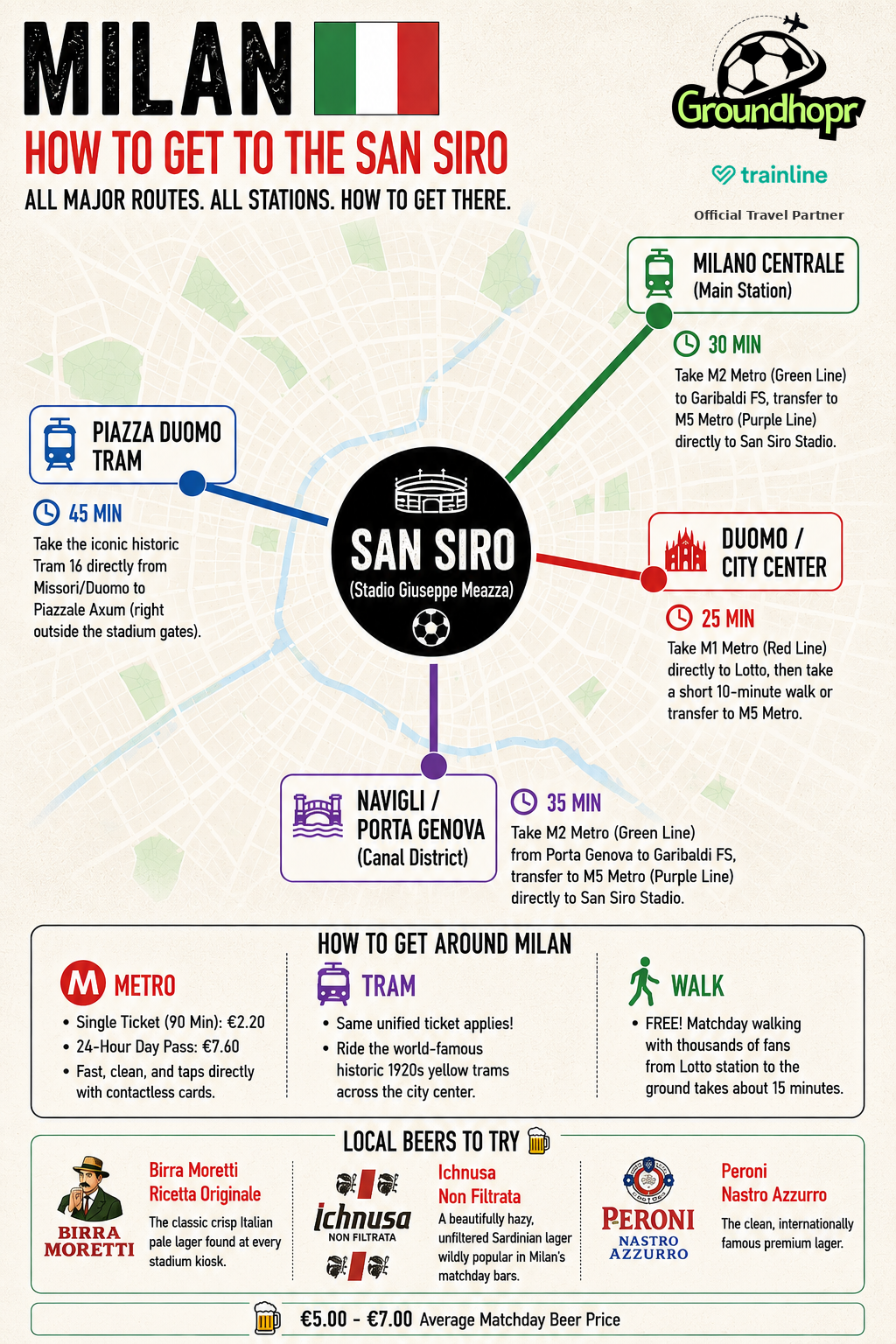
Whatever's on tap at the stadium kiosks, Birra Moretti and Peroni Nastro Azzurro are the safe, everywhere options — but if a bar nearby has Ichnusa Non Filtrata, a hazy, unfiltered Sardinian lager, it's worth seeking out over the usual pre-match lager. Matchday beer prices run about €5-€7.
The Stadium Tour, Win or Lose a Ticket
If your trip doesn't line up with a fixture — or even if it does and you've got time to kill beforehand — the San Siro stadium tour runs on non-matchdays and is worth doing regardless. Walking out of the tunnel onto the pitch with the stands empty gives you a real sense of the scale of the place that's hard to get any other way.
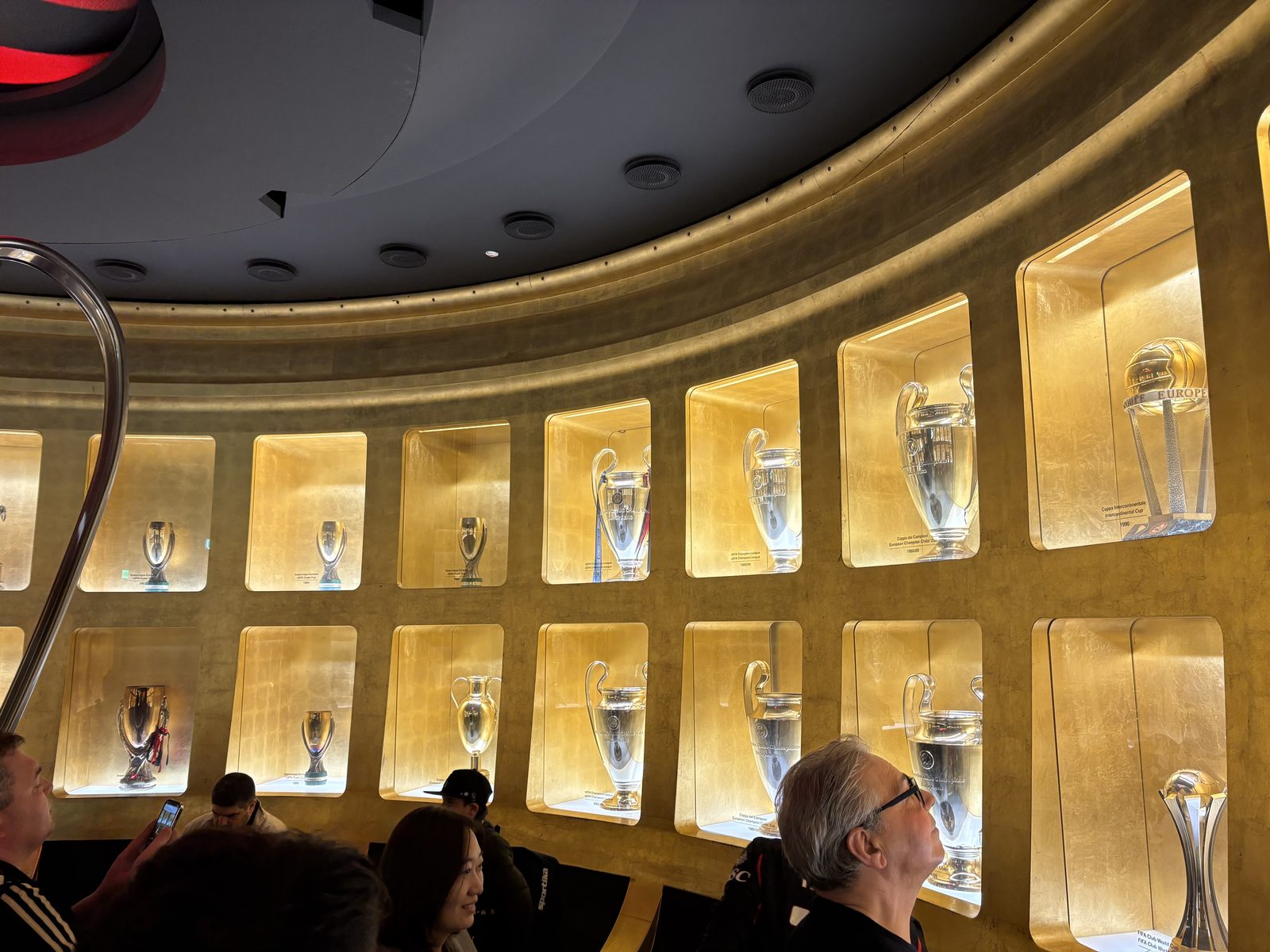
Keep the trophy room separate in your head, though — that's not at the stadium at all. AC Milan's own collection is on display at Casa Milan, the club's headquarters, a short trip from San Siro rather than inside it.
What a Weekend Here Costs
Milan isn't the cheapest city on the groundhopping circuit, but it's still a fraction of a Premier League weekend once you account for the ticket:
A regular league weekend lands around £120 - £310 all in. The derby pushes that ticket price up considerably, but even then it's a fraction of what an equivalent Champions League night costs at most English grounds — you're just paying for a smaller queue and a much louder stadium.
Go Before It's Just a Story
Both clubs have talked for years about a future beyond the San Siro — new stadiums, new sites, plans that come and go depending on who you ask and when you ask them. None of that is settled, and I'm not going to pretend I know how or when it plays out. But grounds like this one don't get built again once they're gone, and the ones that do go tend to go quicker than anyone expects.
That's really the whole pitch for going now rather than "one day." Wembley, Highbury and the old Maracanã all felt permanent too, right up until they weren't.
Plan Your San Siro Trip
Groundhopr can help you build a Milan weekend around either club — search AC Milan or Inter Milan and we'll pull together flights, accommodation, tickets, transport and local tips into one plan.
Ready to see the San Siro for yourself?
Search AC Milan or Inter Milan on Groundhopr and we'll help you build the trip — flights, hotels, tickets, and local tips.
Search on Groundhopr →